.png)
ADHD & Mental Health - How The Signs Are Different
- Mar 31
- 2 min read
Mental health doesn’t always present in the “expected” way when ADHD is involved.
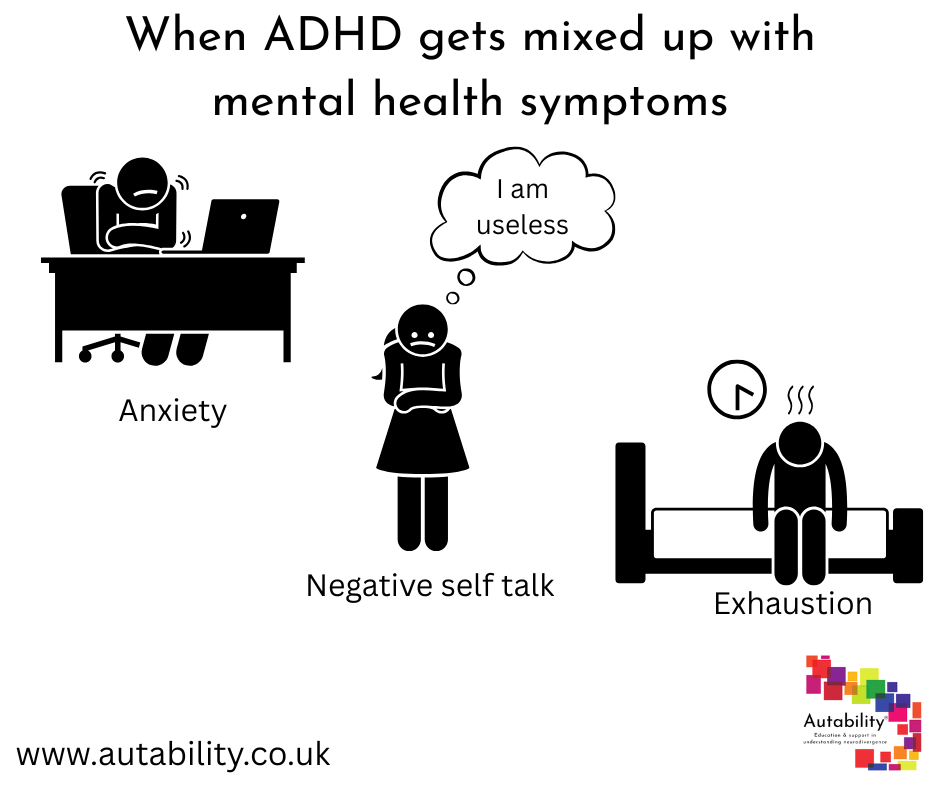
An ADHD child can be struggling deeply and still not look how people imagine anxiety, depression or emotional distress are “supposed” to look. This is one of the reasons mental health can be missed, misunderstood or recognised far later than it should be.
For many ADHD children, emotional distress shows up through emotional dysregulation. Feelings can come on quickly, intensely and with very little warning. Sadness can look like rage. Anxiety can look like defiance. Overwhelm can look like shouting, crying, running off or completely shutting down. What looks like an overreaction is often a nervous system that has gone far beyond its limit.
Rejection can also hit incredibly hard. Many ADHD children experience rejection sensitive dysphoria, where criticism, being told off, feeling left out or even thinking someone is upset with them can trigger a huge emotional response. This can present as panic, tears, anger, withdrawal, people pleasing or a sudden drop in mood that seems to come out of nowhere.
Low self-esteem is also often woven through ADHD mental health, but it doesn’t always look quiet or obvious. It can present as avoidance, giving up quickly, perfectionism, clowning around, refusing to try, or saying “I don’t care” before they’ve even started. Underneath that is often a child who has internalised the belief that they will get it wrong anyway.
Depression in ADHD can be especially hard to spot because it may not present as stillness or sadness alone. It can show up as irritability, restlessness, boredom, emotional outbursts, low frustration tolerance, lack of motivation, sleep disruption or feeling mentally exhausted all the time. Some children won’t look “flat” at all. They may look chaotic, angry or constantly on edge.
Anxiety can also present differently when executive functioning is affected. A child may not say they are anxious, but you may see it in the forgotten tasks, refusal to start, panic over simple demands, avoidance, procrastination, control seeking or complete shutdown when something feels too much. The distress is real, even when it doesn’t look like traditional worry.
Even therapeutic support can be affected by how ADHD presents. Working memory differences can make it harder to retain and build on what was discussed in previous sessions, which means some children may struggle to access support in the way professionals expect them to.
And then there is inconsistency, which is often a huge part of the picture. A child may seem fine one day and completely unable to cope the next. That doesn’t mean the distress isn’t real. ADHD mental health often fluctuates depending on sleep, demands, sensory load, hormones, stress and how hard the brain has had to work just to get through the day.
When we understand how mental health presents in ADHD, we are far more likely to recognise distress for what it is and respond with the right support, rather than just focusing on the behaviour we can see.
For more information on ADHD, check out our website here! https://www.autability.co.uk/adhd



The text shows that the text demonstrates analytical restraint. Evidence remains the primary driver of all core claims. The website provides a richer contextual background for the issue. Contextual breadth is expanded through interactive service frameworks.